

Seed Fund: Joint Research on the Batteries of the Future
Wrocław Tech, Aalto University and Politecnico di Torino are joining forces to advance the development of next-generation batteries. The ARES-APW project is an international initiative focused on developing safer, more durable, and more efficient materials for electrochemical energy storage.
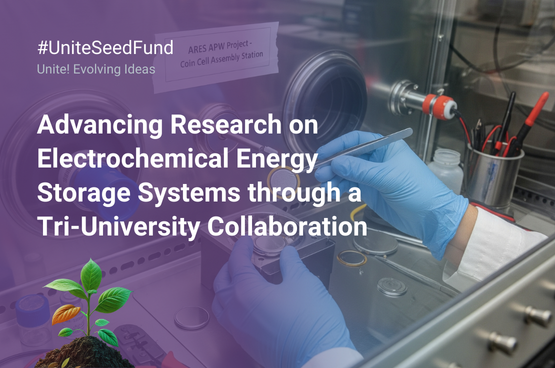
The Advancing Research on Electrochemical Energy Storage Systems through a Tri-University Collaboration (ARES-APW) project is an international research initiative aimed at creating safer, more durable and more efficient materials for energy storage. The endeavour is funded by the Unite! Seed Fund, the programme supporting projects carried out by universities collaborating within the Unite! alliance.
As we rely on an increasing number of electronic devices and the energy sector shifts further toward renewable sources, the need for reliable energy storage solutions becomes ever more urgent. This is why scientists are focusing on two technologies with the greatest current potential: lithium-ion (LIB) and sodium-ion (SIB) batteries. They are valued for their high energy density, cost-effectiveness and proven performance.
What are the researchers working on?
The ARES-APW project concentrates on developing new carbon-based electrode materials. Electrodes play a decisive role in how fast a battery charges, how long it lasts and how safe it is. Better materials mean better batteries, capable of powering electric vehicles, energy-storage systems or everyday electronics.
The research combines fundamental studies with advanced material characterisation techniques, aiming to address the key challenges facing today’s energy sector.
How does the collaboration work?
The project involves three institutions, each responsible for a different stage of the research:
Wrocław Tech – will develop new anode materials based on non-graphitizing carbons and polyoxometalates (POM).
Aalto University – will perform advanced characterization of both fresh and cycled materials to examine their behaviour during battery operation.
Politecnico di Torino – will test the developed materials in coin cells, assessing their performance under standard and extreme conditions.
What is the goal?
The ultimate aim is to create materials that can become an alternative to the electrodes currently used in Li-ion and Na-ion batteries, providing efficiency, safety, and durability.
ARES-APW is also an important step toward strengthening cooperation among Unite! universities. By working together, researchers from across Europe not only share expertise but also lay the groundwork for future joint scientific initiatives.