
Unite! Visiting Professors at TU Darmstadt
TU Darmstadt welcomes Unite! Visiting Professors Carlo Rosso and Muhammad Awais for the next two semesters as part of the third edition of the Unite! Visiting Professorship Programme.
Two Unite! Visiting Professors, Carlo Rosso and Muhammad Awais, will be teaching and conducting research at TU Darmstadt over the next two semesters. For the third time, the Unite! Visiting Professorship Programme has brought international academic talent to TU Darmstadt, promoting interdisciplinary teaching and innovative teaching methods. In an interview, the two visiting professors introduce themselves and share insights into their research and teaching activities.
The Unite! Visiting Professorship Programme primarily targets experienced postdoctoral researchers from the nine Unite! universities. It strengthens connections between academic communities and supports the career development of visiting researchers. While visiting professors gain further teaching experience, TU Darmstadt benefits from new teaching formats and international perspectives. The programme also helps initiate or strengthen joint research projects and encourages the shared use of research infrastructure among members of the Unite! universities.
Carlo Rosso will contribute to teaching and research at TU Darmstadt during the winter semester 2026/2027, followed by Muhammad Awais in the summer semester 2027.
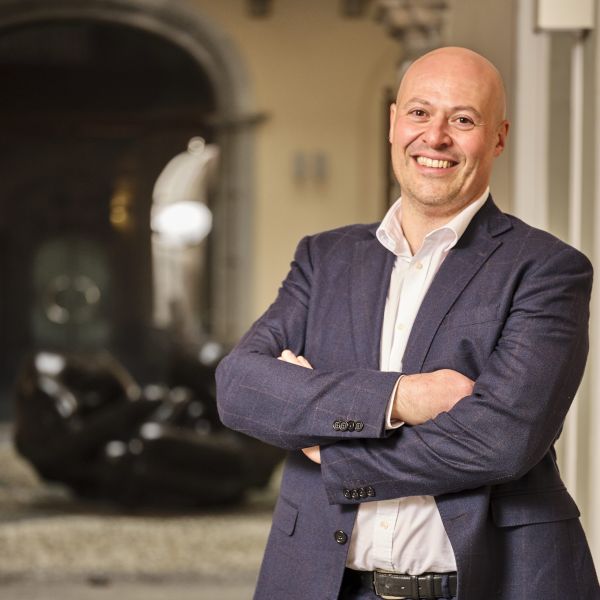
Carlo Rosso is an Associate Professor in the Department of Mechanical and Aerospace Engineering at Politecnico di Torino, Italy. He will collaborate with Professor Rinderknecht in the Department of Mechanical Engineering at TU Darmstadt.
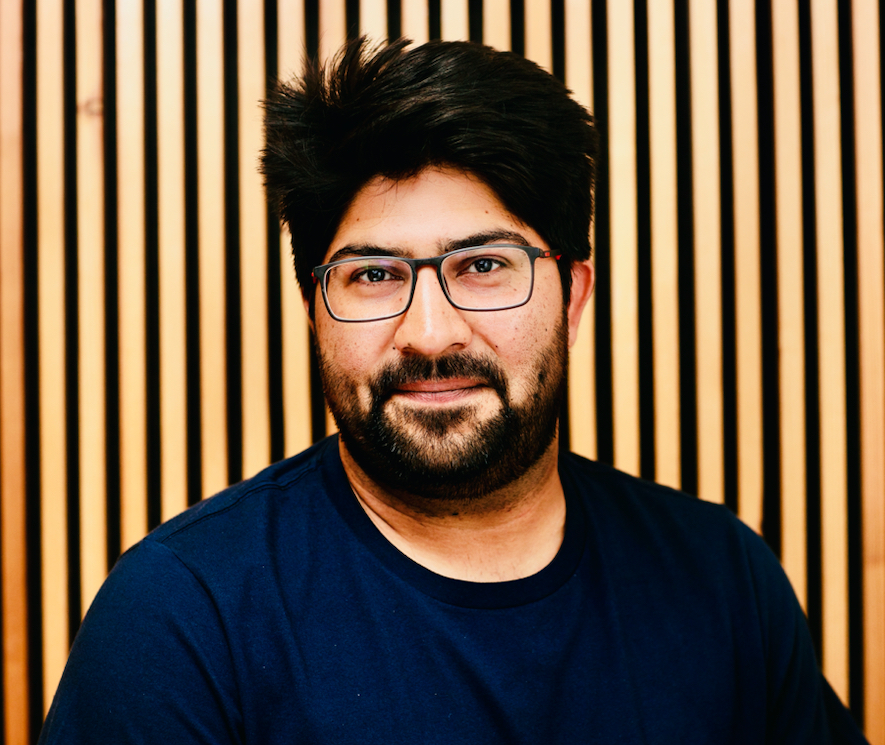
Muhammad Awais is a postdoctoral researcher in the Department of Bioproducts and Biosystems at Aalto University, Finland. He will work with Professor Stark in the Department of Materials and Earth Sciences at TU Darmstadt.
Carlo Rosso
Besides participating in the Unite! programme, what advantages do you find in engaging with the broader European academic ecosystem for your research and teaching?
I think that the possibility to better integrate the European knowledges can built a robust European community and quickly increase European competitiveness.
Why should students be interested in your scientific subject? What makes it exciting?
Gear dynamics is a complex topic that is gaining more and more attention due to electrification. In particular the combination with the other dynamic source can easily help to solve important aspect regarding noise, vibration and harshness.
Which faculty would you like to spend a day in to get a feel for it, and why?
Computer science and electronics because the usage of AI is transversal, and having a look on other way to face it can be of interest.
“If I would be a student today, I would…”
Surely appreciate the Unite! possibility to come across Europe to learn specific topic.
What else are you looking forward to in Germany?
I don’t have an answer to this question, I hope to be like at home!
Muhammad Awais
Unite! has made this visiting professorship possible. From your perspective, what are the main benefits of teaching and researching at a European university?
Aalto University and TU Darmstadt are both Unite! partners, and this visit builds a direct link between the Department of Bioproducts and Biosystems at Aalto and paper research at TU Darmstadt. In research, I will contribute to the FiPRe consortium CRC 1767 (Functional Paper Research), bringing spectroscopic imaging and chemometrics to the study of polymer-modified cellulose fibres. In teaching, I will contribute to the course Advanced Light Microscopy and offer a new elective on spectroscopic characterisation of bio-based materials for the MSc and PhD in Materials Science and BioMaterials Science. A key advantage of the alliance is the opportunity to share infrastructure. Aalto offers photoinduced force microscopy (PiFM) and Vis/NIR hyperspectral imaging, which complement the microscopy and nanomechanical methods at TU Darmstadt. Research on bio-based materials is a shared priority across Unite! and I hope this visit leads to lasting collaboration, joint publications and student exchange.
Why should students be interested in your scientific subject? What makes it exciting?
Wood, paper and other bio-based materials are key to replacing fossil-based products, yet their chemistry is complex and difficult to visualise. My work uses spectroscopic imaging, such as near-infrared, Raman and nanoscale IR hyperspectral imaging, to map chemical composition and changes from the scale of a single fibre down to a few nanometres. Every pixel carries a full spectral fingerprint, and chemometric turns these large datasets into clear chemical images. Students can literally see how a material changes when it is modified or takes up water. In my courses, students will work hands-on with real research data from Functional Paper Research, gaining skills that are valuable in materials science, surface physics and other sensing fields.
Interdisciplinarity plays a key role at TU Darmstadt. Where does your research intersect with other faculties or disciplines?
My research connects naturally with several faculties. The FiPRe consortium CRC 1767 (Functional Paper Research) bring together Chemistry, Materials Science, Mechanical Engineering, Biology and Physics to understand how fibre structure, processing and paper properties are related. My contribution is to link local chemistry to local mechanics, by combining spectroscopic maps with the nanomechanical and microscopy data already produced in Materials Science. Chemistry provides the functionalised fibres, and Mechanical Engineering studies how water and liquids interact with paper, a question spectroscopy can help answer directly. Data science is another important interface. Hyperspectral imaging is a machine vision technique that produces large datasets, and turning them into chemical information depends on chemometrics and machine learning.